
Scope guide
What does pergola installation include?
A typical installation quote covers the frame, posts, roof, footings or anchors and drainage, plus the labor to set them. Electrical work, permits, HOA submittals, add-ons and slab or paver work are usually quoted separately. On site, most jobs take a few days; with permits and HOA review, several weeks from first visit to final inspection is common.
In the Phoenix metro: pergolas and patio covers, with a written quote before any work. Installation is done by a licensed Arizona contractor. Phoenix, Scottsdale, Mesa, Gilbert, Chandler. Call (602) 557-3625
What’s usually included in pergola installation
- A site visit to measure the space and check sun, drainage and access
- Design, drawings and the product selection
- The frame: posts, beams and the roof, whether slats, panels or louvers
- Footings or anchors for the posts
- Drainage, on solid and louvered roofs
- Labor, cleanup and a final walkthrough
- A written, itemized quote that shows the contractor’s ROC license number
Included, quoted separately, and not offered
| Structure | Usually included | Quoted separately |
|---|---|---|
| Louvered pergolas |
|
|
| Aluminum pergolas |
|
|
| Patio covers |
|
|
| Ramadas and shade structures |
|
|
Not usually offered by shade-structure installers: diy kits, shade sails and commercial projects. Scope varies by installer, so compare written quotes line by line.
Footings and anchors
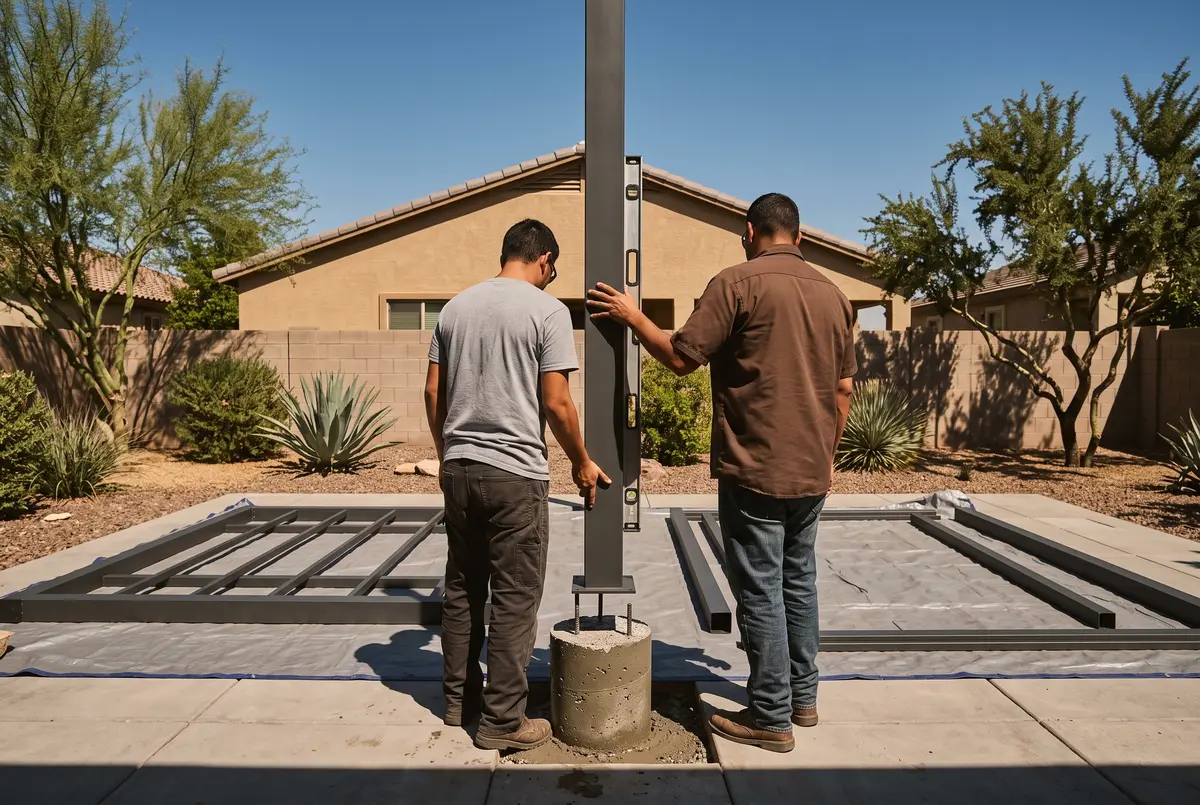
Posts sit on concrete footings in the ground, or on anchors bolted to an existing slab where the product allows it. For attached patio covers built to its standard framing tables, Phoenix’s guideline calls for footings at least 12 inches below undisturbed ground and concrete of at least 2,500 psi, and it limits the cover’s dead load, which rules out tile roofing. On new footings, crews let the concrete cure, often about a day, before assembling the frame. On pavers, the installer cuts or lifts pavers around each post.
Electrical work
Motors, lights and fans need a circuit, and running power to a structure needs a permit even when the structure itself is exempt. Electrical work is usually a separate line on the quote, sometimes done by a separate electrician. Ask whether wiring runs inside the posts and beams, and where the switch or controller goes.
Permits and HOA submittals
Many installers pull the permit and prepare the HOA submittal, but it’s often priced separately, so get it in writing. Arizona contractors must show their ROC license number on bids, contracts and estimates, and Mesa’s permit application for an accessory structure includes a Contractor Licensure Verification Form. The permit guide has each city’s rules.
How long does pergola installation take?
| Stage | Typical time |
|---|---|
| Consultation and site visit | 1–2 weeks after you ask |
| Design and product selection | 1–2 weeks |
| Permit approval, if needed | 1–3 weeks, by city |
| Materials lead time | 2–6 weeks; custom and louvered systems take longer |
| On-site installation | 2–3 days for a standard pergola; 4–5 for louvered or motorized |
Those are installers’ published timelines from outside Arizona; Phoenix-area timing depends on permit and HOA queues. One installer’s StruXure project with HOA approval and city permits took 6 to 8 weeks from planning to final inspection.
What to ask before you sign
- Is every item listed, with what’s included and what’s extra?
- Who pulls the permit and prepares the HOA submittal, and is that in the price?
- Which brand and product line, and what are the wind rating and drainage capacity?
- Is the electrical work included, and who does it?
- What do the structure, finish, motor and workmanship warranties each cover?
- What’s the timeline, and does the quote show the contractor’s ROC number? Check it on the Registrar of Contractors website.
Sources
Prices are published figures, not quotes; checked September 29–30, 2026. Permit rules are paraphrased from each city’s own guidance, and they change, so the installer confirms them for your address.
Codes and timelines
- City of Phoenix, Residential Patio Covers Guideline
- Arizona Registrar of Contractors, Contracts and Advertising
- Hometown Restyling, Pergola Installation
- Gladiator Landscaping, Pergola Installation Process
- Pacific Pavers, StruXure Pergola Installation Guide
Permit rules
- City of Phoenix, Work Exempt from Permit (PBCC 105.2)
- City of Phoenix, Residential Patio Covers Guideline
- City of Phoenix, Residential Over the Counter Permits Guideline
- City of Phoenix Historic Preservation Office, Approvals and Guidelines
- City of Scottsdale, Sheds, Detached Garages, Pergolas, etc.
- City of Scottsdale, Permit Services
- City of Mesa, Residential Construction FAQ
- City of Mesa, Residential Construction
- Town of Gilbert, Municipal Code & Land Development Code FAQ
- City of Chandler, Detached Buildings & Structures Chart (Jan 2025)